A resting metabolic rate test measures how much energy your body uses at rest, while online calorie calculators can only estimate. You enter your age, height, weight, and sex, then a number appears. That number might be a useful starting point, but it’s still just an estimate.
That measured data gives you information that a calculator, app, or wearable can’t fully capture. If you’re active, training regularly, working on body composition, trying to support recovery, or wondering why your current nutrition plan doesn’t seem to fit, measured data can help you make better decisions.
Prediction equations are based on population averages, while your measured resting metabolic rate reflects your own physiology.
What is resting metabolic rate?
Resting metabolic rate, often shortened to RMR, is the amount of energy your body uses at rest to support basic functions like breathing, circulation, brain function, cell repair, and temperature regulation. You may also see it referred to as basal metabolic rate or BMR.
Think of it as your baseline energy need before you add workouts, work stress, parenting, dog walks, strength training, running, errands, or the full-body sport of getting all the groceries into the house in one trip.
Your resting metabolic rate is usually one of the largest parts of your total daily energy expenditure. Your full daily energy needs also include structured exercise, general movement, digestion, and daily activity such as walking to the bus stop.
So, RMR is the foundation. It’s not the whole picture, but it’s a very useful place to start.
What does a resting metabolic rate test measure?
A resting metabolic rate test measures how much oxygen your body uses while you’re resting. From that information, your resting energy expenditure can be estimated.
During the test, you rest quietly while breathing through a mask. The goal is to capture a calm, rested snapshot of your metabolism. Therefore, preparation is important.
Best-practice recommendations for resting metabolic rate measurement include testing in a rested state, avoiding exercise beforehand, and following pre-test instructions around food, caffeine, alcohol, and nicotine. When those conditions are controlled, the results are more accurate, and much more useful than a quick online estimate.
What calculators can tell you
Online calculators usually use prediction equations. These equations may consider:
- Age
- Height
- Weight
- Sex
- Sometimes activity level
- Sometimes estimated body composition
Some equations are more accurate than others at a population level. The challenge is that population-level accuracy doesn’t always translate well to one individual.
A calculator can estimate what someone with similar basic characteristics might burn at rest. It can’t measure your physiology directly.
That difference becomes important when you’re making decisions about fuelling, recovery, performance, or body composition. Being off by a small amount may not change much. Being off by a larger amount can lead to weight loss, weight gain, or a plan that doesn’t match what your body actually needs to perform its best.
What a resting metabolic rate test tells you that a calculator can’t
1. Your measured resting energy needs
The biggest benefit of a resting metabolic rate test is that it gives you measured information.
Two people can be the same age, height, weight, and sex, yet have different resting metabolic rates. Training history, lean mass, genetics, dieting history, hormones, medications, health status, sleep, and stress can all influence energy needs.
This is why individualized testing can be so helpful. Active people don’t all respond the same way to the same training plan, nutrition strategy, or recovery approach. Your baseline data gives you a more personal starting point.
2. Whether your current calorie target is realistic
Many active people unintentionally under-fuel.
A calculator may give a low estimate. An app might encourage an aggressive calorie target, and many suggest eating back the calories you burn during exercise. That can be problematic because fitness watches can vary widely in how accurately they estimate calorie burn. Busy schedules can also make it hard to eat enough, especially when training volume increases or meals get squeezed between work, family, and workouts.
A resting metabolic rate test can help you evaluate whether your current intake target makes sense as a baseline. It doesn’t tell you your full daily needs by itself, but it can show whether the foundation of your plan is reasonable.
This can be helpful if you’re:
- Feeling flat during workouts
- Trying to support strength training
- Working on body composition
- Increasing running or training volume
- Returning from injury
- Feeling constantly hungry, tired, or irritable
- Stuck in a cycle of restriction and rebound
Active bodies need enough energy to train, adapt, recover, and function well. Eating less isn’t always the answer, you need to ensure that you’re fuelling enough for what you’re asking your body to do.
3. How much energy your body needs before exercise is added
A common mistake is treating RMR like a daily calorie target.
It definitely isn’t.
Your RMR is the energy your body uses at rest. It’s the absolute bare minimum that your body needs just to function. This is before you add any sort of movement, let alone structured exercise.
For example, if your measured RMR is 1,500 calories per day, that doesn’t mean 1,500 calories is your daily intake target. It means your body uses approximately that amount at rest to perform basic functions such as respiration, circulation, and organ functions.
This is one reason very low-calorie targets can backfire for people who are trying to train consistently. If you’re active and want to maintain muscle, recover well, and feel good during workouts, your total needs will be higher than your resting needs.
4. Whether your “slow metabolism” assumption is accurate
A lot of people assume they have a slow metabolism.
Sometimes their measured RMR is lower than predicted. Other times, it’s within a normal range and the bigger issue is something else, like inconsistent intake, low protein, high stress, poor sleep, reduced daily movement from fatigue, or a training load that doesn’t match recovery capacity.
A resting metabolic rate test helps separate assumptions from data.
5. A better starting point for nutrition and training conversations
A resting metabolic rate test isn’t a complete nutrition plan. It doesn’t replace individualized nutrition counselling, medical care, or bloodwork when those are needed.
What it can do is give you and your health or performance professional better baseline information.
Your RMR result can help guide conversations around:
- Daily energy needs
- Fuelling for training
- Recovery support
- Body composition goals
- Potential under-fuelling patterns
- How intake may need to change as training changes
This can be especially useful during race builds, strength training blocks, injury recovery, perimenopause, postpartum return to exercise, or seasons of high life stress.
RMR is one part of the broader nutrition picture. Testing provides baseline data, and a Sports Dietitian can help apply it to your overall fuelling plan.
What a resting metabolic rate test doesn’t tell you
A resting metabolic rate test measures your resting energy needs, then your report can estimate total daily energy expenditure and calorie guidance based on your selected activity level and goal. That said, it still isn’t a perfect prediction of every day in real life. Daily movement, workouts, sleep, stress, hormones, and recovery all influence the bigger picture.
It also won’t diagnose a medical condition or replace care from your physician, dietitian, or other healthcare provider.
The best use of RMR testing is to support informed decision-making. You don’t need to obsess over the number. You use it as a baseline, then interpret it alongside your training, symptoms, goals, and lifestyle.
Resting metabolic rate testing versus wearable calorie estimates
Wearables can be helpful for tracking habits and trends, but calorie burn estimates can be highly inaccurate.
A systematic review on commercially available wearable devices found that while some devices were more accurate for step count and heart rate in certain settings, energy expenditure estimates were not accurate across brands. That means the calorie number on your watch should be treated as an estimate, not a precise measurement.
A resting metabolic rate test is different because it measures your oxygen use in a controlled resting state, which gives you a stronger baseline than relying on wearable calorie estimates alone.
Use your watch for patterns. Use testing when you want more personalized physiological data.
What’s included in your resting metabolic rate test report?
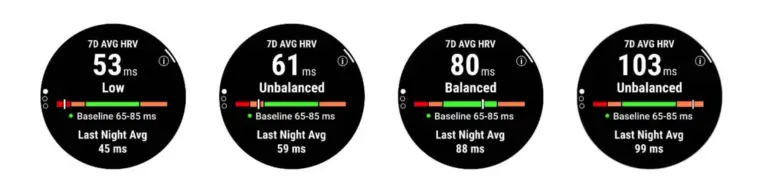
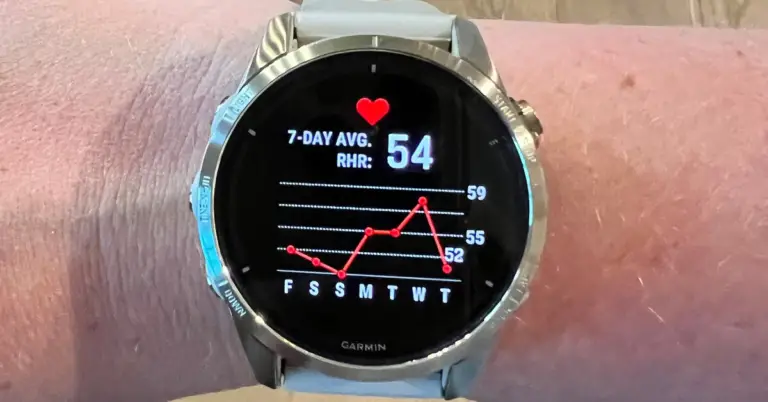
Your report includes your measured resting energy expenditure, a comparison to predicted metabolic rate, estimated total daily energy expenditure, and a goal intake target based on your activity level and whether you’re aiming to lose, gain, or maintain weight. It also includes supporting metrics such as resting heart rate and heart rate variability, which can be useful context but shouldn’t be treated as stand-alone diagnoses.
How to use your resting metabolic rate test results wisely
Once you have your RMR result, interpretation is the next step. The report gives you more than one number. It includes your measured resting energy expenditure, an estimated total daily energy expenditure based on your activity level, and a goal intake target based on whether you’re aiming to lose, gain, or maintain weight.
Your result should be considered alongside your:
- Training volume
- Daily movement
- Strength training
- Work and family demands
- Recovery status
- Body composition goals
- Performance goals
- Current intake
- Energy levels
- Injury history
If your RMR is higher than expected, your current fuelling may not be enough to support your training and daily demands. If it’s lower than expected, then that’s good context for planning your fuelling strategy.
Recent dieting history, low energy availability, changes in lean mass, illness, medications, hormones, sleep, and stress can all influence what’s going on.
The bottom line
A calculator gives you an estimate. A resting metabolic rate test gives you measured data.
If you’re active and want better information about fuelling, recovery, training support, or body composition, RMR testing can be a helpful place to start. It won’t tell you everything, but it can replace a lot of guesswork with useful information about your own body.
And when you’re already juggling work, family, workouts, meals, and stress, better information is worth having.
Key takeaways
- A resting metabolic rate test measures how much energy your body uses at rest.
- Online calculators estimate RMR using equations, but they can be inaccurate for individuals.
- RMR testing can help active people better understand fuelling needs, training support, recovery, and body composition planning.
- Your RMR isn’t your full daily calorie need. Activity, exercise, digestion, and daily movement need to be added.
- The most useful results come from interpreting your RMR alongside your goals, training, lifestyle, and recovery.
For tailored nutrition guidance, I recommend discussing your results with a Sports Dietitian. If you’re in British Columbia or Ontario, check out No Sweat Nutrition
Curious what your metabolism is actually doing?
Morgan Exercise Physiology offers resting metabolic rate testing in Port Moody, BC for active people who want better data to support their health, training, recovery, and body composition goals. You’ll receive a detailed report that includes your measured resting energy expenditure, estimated daily energy needs, and calorie guidance based on your activity level and goal.
Learn more or book your test here.
You can also subscribe to my newsletter or follow me on Instagram for more evidence based tips for runners
Frequently Asked Questions about Resting Metabolic Rate Testing
A resting metabolic rate test measures how much energy your body uses at rest. It typically involves resting quietly while you breathe through a mask.
Yes. An online calculator estimates your resting metabolic rate using basic information like age, height, weight, and sex. A resting metabolic rate test measures your physiology directly, giving you more personalized information.
A resting metabolic rate test may be helpful for active people who want better information about fuelling, recovery, body composition, or training support. It can be especially useful if calculator-based targets don’t seem to match your real-life experience.
Yes, it can provide calorie guidance when your measured RMR is combined with your activity level and goal. After your test, we discuss whether your goal is weight loss, weight gain, or maintenance, then use that information in the VO2 Master app to generate a report with estimated total daily energy expenditure and a suggested daily intake target. Your result should still be interpreted in context, especially if you’re training, recovering from injury, or working on performance. I always recommend discussing your results with a dietician for specific meal plan advice.
Morgan Exercise Physiology offers resting metabolic rate testing in Port Moody, BC. The test provides measured information about your resting energy needs and can help guide more informed health, training, and nutrition conversations.
References
Compher, C., Frankenfield, D., Keim, N., Roth-Yousey, L., & Evidence Analysis Working Group (2006). Best practice methods to apply to measurement of resting metabolic rate in adults: a systematic review. Journal of the American Dietetic Association, 106(6), 881–903. https://doi.org/10.1016/j.jada.2006.02.009
Delsoglio, M., Achamrah, N., Berger, M. M., & Pichard, C. (2019). Indirect Calorimetry in Clinical Practice. Journal of clinical medicine, 8(9), 1387. https://doi.org/10.3390/jcm8091387
Frankenfield, D., Roth-Yousey, L., & Compher, C. (2005). Comparison of predictive equations for resting metabolic rate in healthy nonobese and obese adults: a systematic review. Journal of the American Dietetic Association, 105(5), 775–789. https://doi.org/10.1016/j.jada.2005.02.005
Fuller, D., Colwell, E., Low, J., Orychock, K., Tobin, M. A., Simango, B., Buote, R., Van Heerden, D., Luan, H., Cullen, K., Slade, L., & Taylor, N. G. A. (2020). Reliability and Validity of Commercially Available Wearable Devices for Measuring Steps, Energy Expenditure, and Heart Rate: Systematic Review. JMIR mHealth and uHealth, 8(9), e18694. https://doi.org/10.2196/18694
O’Neill, J. E. R., Corish, C. A., & Horner, K. (2023). Accuracy of Resting Metabolic Rate Prediction Equations in Athletes: A Systematic Review with Meta-analysis. Sports medicine (Auckland, N.Z.), 53(12), 2373–2398. https://doi.org/10.1007/s40279-023-01896-z