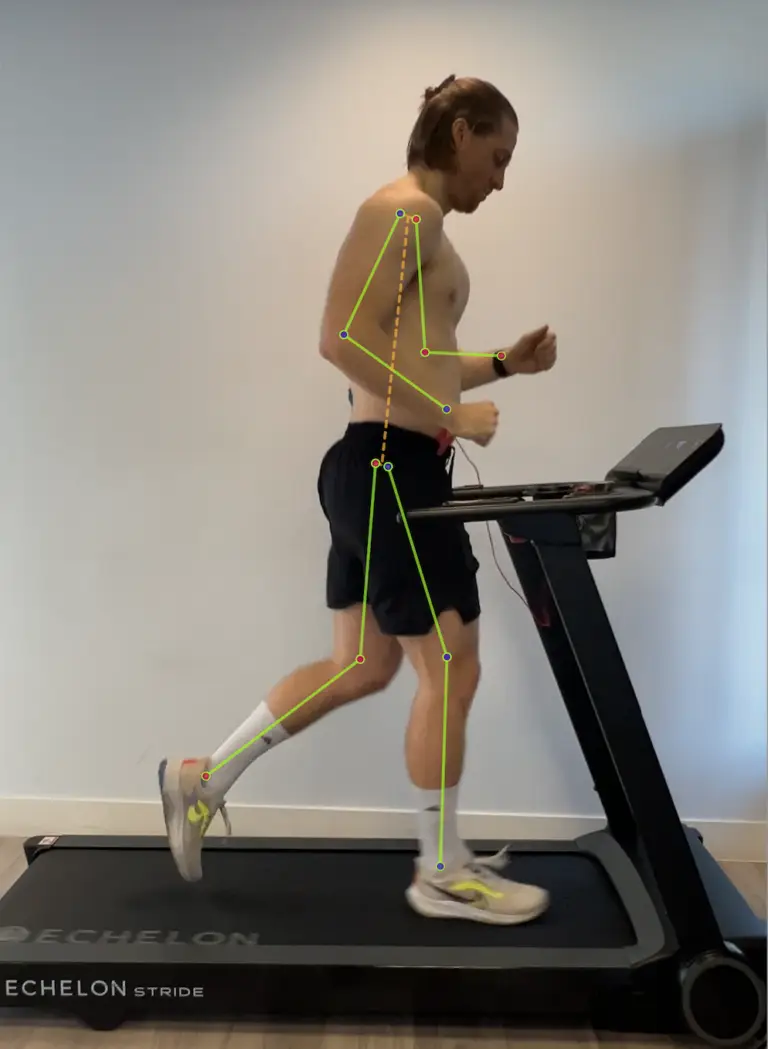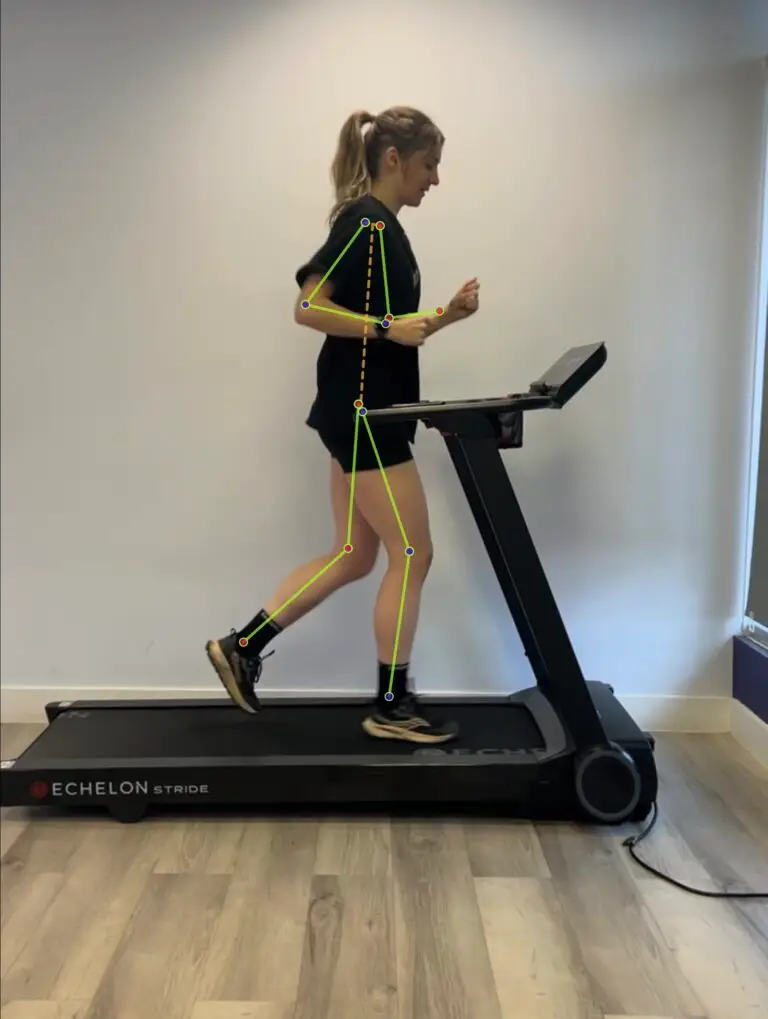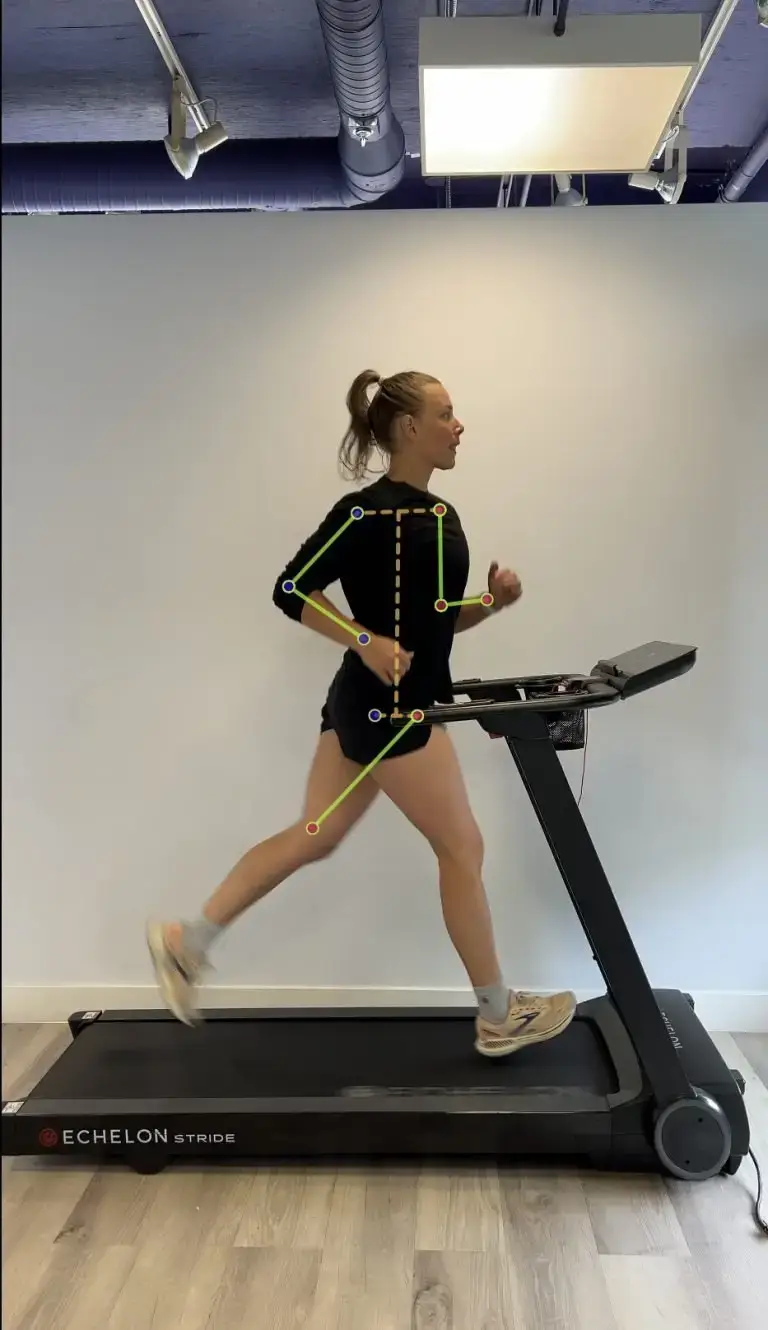
Booking a running assessment can feel a bit intimidating. You might be thinking, “Am I about to get roasted for heel striking?” Don’t worry, you’re not about to get shamed for how you run.
During a running assessment, we look at how you run, how your training is going, and what matters for your goals. Sometimes you’ll leave with a couple of simple cues or drills. Other times you’ll leave with confirmation that your mechanics look solid and the real lever is training load, strength, shoes, or recovery. We don’t fix what’s not broken.
In this post, we’ll cover:
- What to bring and how to prepare
- What happens during the treadmill analysis
- What happens during the strength and mobility assessment
- What we analyse
- What you’ll leave with
- Common questions runners ask
[Related: What Is a Running Assessment? When Should You Book a Running Assessment?]
Before You Arrive: How to Prepare
You don’t need to do anything extreme before your assessment. A few simple steps help a lot.
Bring:
- Your current running shoes, and your most recent pair if they are different
- Your orthotics, if you use them
- Clothes you can run comfortably in
- A snapshot of your training from the last 2 to 4 weeks, your watch data is fine
- Notes on any symptoms you may be having – where it hurts, when it shows up, and what makes it better or worse
Try to avoid:
- A hard workout the day before
- Testing brand new shoes for the first time right before your appointment
- Arriving dehydrated or underfuelled
You want your body to show your normal running pattern, showing up super fatigued won’t help here.
Step 1: Intake and History
We start with the boring but important part, your history.
We’ll go through:
- Your running background and current goal
- Weekly mileage and intensity
- Recent changes in training, surfaces, or shoes
- Injury history and current symptoms
- Strength training and recovery habits
- Sleep, stress, and schedule factors that influence load vs capacity
This matters because the same running pattern can be fine for one runner and irritating for another, depending on what their tissues can tolerate right now. We’ll discuss this whilst you complete a warm up walk or jog on the treadmill.
Step 2: Treadmill Running Analysis
Next is the running portion of the assessment.
We run on a treadmill because it gives consistent speed, consistent surface, and clean video angles. If your goals or symptoms relate to hills, we can include a short incline segment as well.
We typically record from the side, rear, and sometimes front view where possible.
We’ll look at your easy pace, a tempo pace, and a short fatigue segment if your issue shows up later in a run.
If your symptoms are distance based, we can sometimes mimic that by increasing time, changing pace, or adding incline.
Step 3: Strength and Mobility Assessment
After the treadmill analysis, we move into the strength and mobility portion.
This is a key part of the appointment because mechanics on video often make more sense when we understand what your body can and can’t do off the treadmill.
We will assess:
- Single leg strength, balance, and control
- Hip strength and pelvic stability
- Calf strength and endurance
- Ankle mobility and foot control
- Trunk strength and coordination
- Basic range of motion that influences stride, such as hip extension
This can help to identify the factors most likely to influence your running pattern and your current symptoms.
What We Look At on Video
This will vary runner to runner. Here are some of the common things we analyse.
1. Foot strike and landing position
This is where runners often get fixated, but it is rarely the whole story.
We look at:
- Where your foot lands relative to your centre of mass
- Tibia position at contact
- Signs of overstriding or excessive braking
2. Cadence and stride length
We look at cadence and stride length at easy pace and, when needed, at faster paces.
We’re not chasing a magic cadence number, there is no blanket guideline that is appropriate for every runner. Instead, we’re looking for what fits your body, your pace, and your goals.
3. Pelvis and trunk mechanics
This is where a lot of “mystery injuries” may start.
We look at:
- Pelvic drop and hip control
- Trunk position and stability
- Excess rotation or side to side movement
4. Knee tracking and lower limb alignment
We look at how your knee tracks relative to your foot, and whether your lower limb is controlling load well when you land.
5. What changes under fatigue
When appropriate, we look at what happens when you warm up and when you’re fatigued. Many runners look great for the first 30 seconds, the useful clues often show up later.
What You’ll Leave With
You won’t leave with a 20 page report and a headache. You’ll receive a clear plan.
That usually includes:
- The top 2 to 3 priorities that matter most
- Simple cues to try on your next run
- Drills or adjustments, if they are truly needed
- Strength and mobility work that supports your goals and your mechanics
- Training tweaks if load vs capacity is the bigger issue
Sometimes your mechanics look fine and you don’t need drills. In that case, the focus shifts to training structure, strength progression, recovery, and how you are building load. Again, and I can’t emphasize enough how important this is: we don’t fix what isn’t broken.
Ready to Book a Running Assessment?
If you want clear feedback on your stride and a plan you can actually use, book a running assessment in Port Moody. We’ll look at what’s happening, what’s driving the issue, and steps you can take to help resolve it.
Want more practical running advice? Subscribe to my newsletter or follow me on Instagram for weekly tips on running, strength, and recovery.
Frequently Asked Questions about Running Assessments
A running assessment includes an intake of your training and injury history, treadmill running analysis with video, and a strength and mobility assessment. You’ll leave with a clear plan for what to focus on next.
Not necessarily. Heel striking is common and often completely fine. Where your foot lands relative to your body and how you manage load usually matters more.
Bring your running shoes, any orthotics you use, comfortable running clothes, and a recent overview of your training and symptoms.
Sometimes. If your mechanics look fine, you may not need drills, and the focus may shift to training load, strength progression, shoes, or recovery.
Yes. Your running mechanics and your strength and mobility go together, so the full appointment includes both.
Some runners may feel an immediate difference from a cue or small adjustment. Longer term change comes from consistent practice and strength work over several weeks.