One of my friends and I were talking about how hard it can be to balance weekly training with social run club night.
Key word being social, we start and finish at a brewery after all.
But there are some speedy humans in our group. So while run club night looks like it should be a recovery run, short-ish distance (usually 5-10k’s), no formal workout, and casual conversation; the pace can creep up quickly.
You start chatting with someone at the front. The legs feel good. The conversation is flowing. Then suddenly your “recovery run” is brushing up against tempo pace, and tomorrow’s workout is already looking challenging.
This is one of the biggest mistakes I see runners make: they call something a recovery run, but their body experiences it as another workout.
Your recovery run pace should feel genuinely easy. The purpose is to support the rest of your training, not prove fitness, chase Strava segments, or keep up with the fastest person at run club.
What Is a Recovery Run?
A recovery run is a short, low-intensity run used to promote movement, maintain routine, and add gentle aerobic volume without creating much additional fatigue.
It should feel extremely easy. For most runners, true recovery intensity sits below a standard endurance run. Zone 1 is usually recovery-focused and should feel almost too easy, while Zone 2 is more of an endurance or base-building intensity, still comfortable but more purposeful than a true recovery run.
That distinction is important.
A recovery run is not your usual easy run with a nicer name. It’s also not a sneaky extra workout. It should leave you feeling the same or better by the end.
Recovery Run Pace vs Easy Run Pace
Many runners use “easy run” and “recovery run” interchangeably, but they’re not always the same.
An easy run is usually comfortable aerobic running. You can speak in sentences, your breathing is controlled, and you’re building endurance without digging too deep.
A recovery run sits at the very easy end of that spectrum. It’s slower, shorter, and more focused on reducing fatigue between harder sessions.
A useful way to think about it:
Easy run: builds aerobic fitness.
Recovery run: helps you absorb the training you’ve already done.
That doesn’t mean recovery runs are magical. They don’t erase poor sleep, under-fuelling, or a training plan that’s too aggressive. But when used well, they can help you stay consistent without adding unnecessary load.
Why Recovery Run Pace Is Usually Slower Than You Think
If your recovery run pace feels embarrassingly slow, you may just be doing it right.
Runners often struggle with this because we’re used to judging training by pace, distance, and effort. Slowing down can feel like going backwards, especially if you’re disciplined, goal-driven, and already squeezing training around work, family, and life.
But running too hard on recovery days can create a training grey zone. You’re not running hard enough to get the full benefit of a quality workout, but you’re not running easy enough to recover properly either.
This can affect the rest of your week. Your speed session may feel flat, your long run heart rate may drift higher than usual, and your legs may feel heavy for no obvious reason.
Running injuries and training setbacks often relate to the balance between the stress applied to the body and the body’s current capacity to adapt. Training stress can come from speed, hills, volume, terrain, other activities, shoes, stress, sleep, and recovery capacity.
In other words, your body counts the load whether your training plan calls it “easy” or not.
[Related: Why Runners Get Injured, Understanding Load vs Capacity]
Two Common Recovery Run Mistakes
Mistake 1: Running the Same Pace You Always Run
A lot of runners have one default pace. They run it when they’re fresh, tired, happy, stressed, short on time, or running with a friend.
The problem is that your body doesn’t need the same stimulus every day. Training works best when different runs have different jobs.
Your recovery run pace should be noticeably easier than your steady run pace. You should be able to talk comfortably, breathe through your nose for stretches if that works for you, and finish feeling like you could keep going.
Mistake 2: Adding an Extra Run and Calling It Recovery
I get it, running is awesome. When you’re feeling good, it’s tempting to add more.
But adding another run to an already full week still increases training load. If that extra run replaces rest, sleep, strength work, or actual recovery, it may not be helping.
Active recovery works best when intensity stays very low and the session is relatively short. Run-walk intervals can also be useful for beginners, runners returning from injury, or runners who need movement without adding much fatigue.
So yes, a recovery run can be useful. But it needs to be short enough and easy enough to serve the purpose.
How to Find Your Recovery Run Pace
There are a few ways to gauge recovery run pace. The best approach usually combines more than one.
Use the Talk Test
If you can’t speak in full sentences, you’re probably running too hard for recovery.
A recovery run should feel conversational. Not “I can gasp out three words between breaths” conversational. Actual chatting pace.
This is why social runs can be sneaky. If you’re chatting comfortably, great. If you’re pretending to listen while silently calculating how long until the hill ends, that’s a clue.
Use RPE
RPE stands for rate of perceived exertion. For a recovery run, aim for about 2 to 3 out of 10.
It should feel controlled, light, and easy. You’re moving, but you’re not chasing fitness during that run.
RPE is useful because it helps you connect the numbers on your watch with how your body actually feels. Pace, time, GPS data, and heart rate can all be helpful, but they work best when paired with your own effort awareness.
Use Heart Rate, Carefully
Heart rate can be helpful, especially if your zones are accurate. For many runners, a recovery run will fall in Zone 1 or very low Zone 2.
The catch is that heart rate is influenced by heat, humidity, fatigue, stress, sleep, caffeine, illness, dehydration, and cardiac drift. Cardiac drift means your heart rate can rise during a run even when your pace and effort stay the same.
That’s why heart rate should be used alongside RPE and the talk test, not instead of them.
This is one reason VO2 max testing can be so useful. When your heart rate zones are based on actual physiology rather than watch estimates or age-based formulas, it becomes easier to know whether your recovery run is truly easy.
Check out VO2 Max Testing in Port Moody
Why Your Watch Zones Might Be Wrong
A lot of runners rely on watch-generated zones, but those zones are often based on estimates.
The classic “220 minus age” formula for max heart rate is especially limited. It was never designed to precisely prescribe training zones for individual athletes, yet many runners still end up with zones based on formulas like this.
This is important because if your zones are wrong, your recovery run pace may be wrong too.
You might think you’re in an easy zone when you’re actually running closer to steady state. Or you might be forcing yourself to slow down unnecessarily because your watch thinks your heart rate should behave like a spreadsheet.
A VO2 max test can identify more accurate training zones, including ventilatory thresholds, heart rate max, and the intensities that match your actual physiology. This can give you a more individualized reference for judging recovery-run intensity.
[Related: Why your watch zones might be lying to you]
Signs Your Recovery Runs Are Too Fast
Your recovery run pace may be too fast if:
- Your easy days and hard days all feel similar
- You struggle to hit pace or power targets in workouts
- Your long run heart rate is higher than usual
- You feel flat, heavy, or unusually tired
- Small niggles don’t settle between runs
- You’re getting sick more often
- Your sleep quality is poor
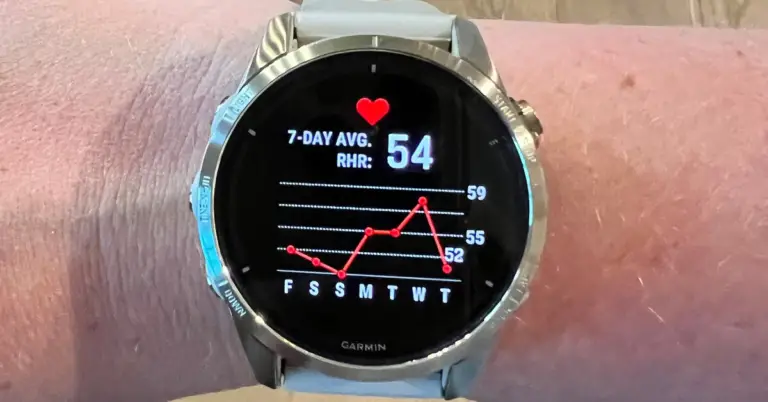
- Your resting heart rate is trending higher
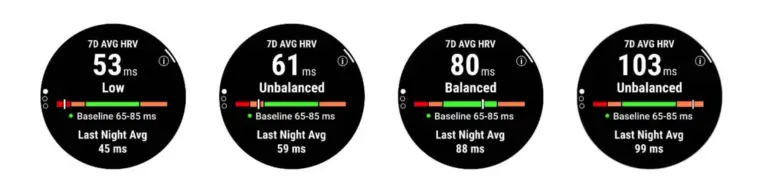
- Your HRV is trending lower
- You feel more irritable than usual
None of these signs automatically means your recovery runs are the only issue. Training load, sleep, fuelling, stress, hormones, work, parenting, and life all count. But if several of these are showing up, your “easy” days are a good place to look first.
What About Run Club?
Run club can absolutely still be part of your week. You don’t have to quit your friends for the sake of your training. But you do need a plan.
Before you go, decide what the run is for. Is it recovery? Easy aerobic volume? Social time? A moderate run? There’s no wrong answer, but there is a problem when the plan says recovery and the execution says workout.
A few options:
- Choose the group running at a more social pace.
- Start at the back and stay there.
- Use run-walk intervals if needed.
- Set a heart rate cap.
- Pick the shorter route.
- Let the faster crew go ahead.
- Save the spicy pace for a day when spicy pace is actually on the menu.
If your run club always turns into a harder effort, treat it as a workout in your weekly plan. That may mean adjusting the day before or after so that your training still makes sense.
Keep Easy Days Easy So Hard Days Can Be Hard
The goal of a recovery run is not to prove that you’re fit. The goal is to help you recover well enough to train consistently.
Research on endurance training intensity distribution shows that successful endurance athletes tend to complete a large proportion of training at low intensity, with smaller amounts of higher-intensity work. This doesn’t mean every recreational runner needs to follow a perfect 80/20 model, but it does support the basic principle that most running should not feel hard.
Your hard workouts need enough space around them to be effective. If every run becomes moderate, you may end up tired without getting the full benefit from either your easy days or your hard days.
That’s why “keep easy days easy and hard days hard” is still one of the simplest and most useful rules in running.
Use a Training Diary
A training diary is one of the most underrated tools for runners.
You don’t need anything fancy. Pen and paper works. So do Garmin notes, Strava private notes, Training Peaks, Final Surge, or the notes app on your phone.
Track the basics:
- How the run felt.
- Sleep quality.
- Stress level.
- Soreness or niggles.
- Heart rate trends.
- Fuelling.
- What happened the day before.
Patterns are often easier to spot later. In the moment, a poor run can feel random. Looking back, you may see that every “random” bad run followed poor sleep, an under-fuelled long run, your busiest work day, or a recovery day that wasn’t actually recovery.
The Bottom Line
Your recovery run pace should feel easy. Very easy.
If your recovery runs are turning into steady runs, tempo runs, or quiet competitions with the fastest person at run club, they’re not doing the job you think they’re doing.
Slow down. Shorten the run if needed. Use RPE, heart rate, and common sense together. Pay attention to how you feel the next day.
And if you’re tired of guessing your zones, VO2 max testing can help you understand your actual physiology so your recovery runs, easy runs, workouts, and long runs all have a clearer purpose.
Key takeaways
- Recovery run pace should feel extremely easy, usually easier than your regular easy run pace.
- A recovery run should support your harder training, not add hidden fatigue.
- Use a combination of talk test, RPE, heart rate, and next-day response to judge whether the pace was appropriate.
- Watch-generated heart rate zones can be inaccurate, especially if they rely on estimates rather than testing.
- Run club can still fit into your plan, but decide ahead of time whether it’s truly a recovery run or a social workout.
- VO2 max testing can help runners set more accurate training zones and reduce guesswork.
Want to stop guessing your recovery run pace?
VO2 max testing gives you individualized heart rate zones, ventilatory thresholds, HR max, VO2 max, and training recommendations so you know what “easy” should actually feel like.
Book your VO2 max test in Port Moody HERE
You can also also subscribe to my newsletter or follow me on Instagram for more evidence based tips for runners
Frequently Asked Questions About Recovery Runs
A recovery run should be very easy. You should be able to speak in full sentences, keep your breathing controlled, and finish feeling better or the same as when you started. For many runners, this is Zone 1 or very low Zone 2.
Not always. An easy run usually builds aerobic fitness, while a recovery run is shorter, slower, and designed to add gentle movement without creating much fatigue.
Your recovery run may be too fast if you feel tired the next day, struggle to hit your workout paces, notice higher-than-usual heart rate on easy runs, or feel like your easy and hard days are blending together.
Yes, heart rate can be useful, but it works best when your zones are accurate. Heat, fatigue, stress, caffeine, illness, dehydration, and cardiac drift can all affect heart rate, so use RPE and the talk test as well.
Many watches estimate zones using formulas or incomplete data. VO2 max testing provides more individualized training zones based on your own physiological response.
Yes, but only if the pace stays easy enough. If run club always turns into a moderate or hard effort, count it as a workout and adjust the rest of your week accordingly.
References
Silva Oliveira, P., Boppre, G., & Fonseca, H. (2024). Comparison of Polarized Versus Other Types of Endurance Training Intensity Distribution on Athletes’ Endurance Performance: A Systematic Review with Meta-analysis. Sports medicine (Auckland, N.Z.), 54(8), 2071–2095. https://doi.org/10.1007/s40279-024-02034-z
Seiler S. (2010). What is best practice for training intensity and duration distribution in endurance athletes?. International journal of sports physiology and performance, 5(3), 276–291. https://doi.org/10.1123/ijspp.5.3.276
Stöggl, T. L., & Sperlich, B. (2015). The training intensity distribution among well-trained and elite endurance athletes. Frontiers in physiology, 6, 295. https://doi.org/10.3389/fphys.2015.00295