Your watch is probably one of your favourite running tools. It tells you your pace, distance, heart rate, cadence, training status, recovery time, sleep score, race prediction, and possibly whether Mercury is in retrograde.
Okay, maybe not that last one. Yet.
But while running watches can be incredibly helpful for tracking general trends, the heart rate zones they give you are often based on estimates. That means they can be useful as a rough guide, but less helpful when you start treating them like exact training prescriptions.
And this is where many runners get into trouble.
You head out for an “easy” run, but your watch says you’re in Zone 4. You slow down, then slow down again, then wonder if walking uphill still counts as running. Or you follow a Zone 2 plan perfectly, only to feel like the zones don’t match your effort at all.
If your zones consistently don’t match your effort, the estimates behind them may be the problem.
For runners who want to train smarter, avoid overdoing every run, and build fitness with more confidence, VO₂ max testing and heart rate zone prescription can provide training zones based on measured physiology rather than age-predicted estimates.
Where Watch Heart Rate Zones Usually Come From
Most running watches assign heart rate zones using formulas. These formulas often estimate your maximum heart rate based on your age, then divide that number into percentage-based zones.
For example, a watch might estimate your max heart rate, then create zones like:
Zone 1: Warm up
Zone 2: Easy
Zone 3: Aerobic
Zone 4: Threshold
Zone 5: Maximum
Now this system isn’t useless, it can be helpful for spotting patterns over time. The problem is that many runners assume those zones are individually precise, when they may actually be built from broad population averages.
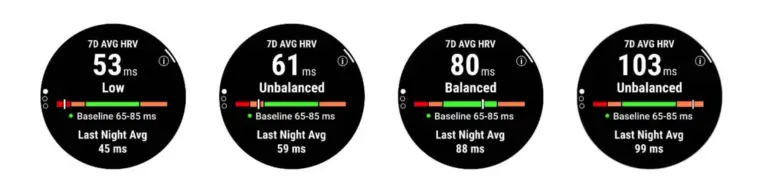
Age-predicted maximum heart rate equations can be inaccurate for individuals, and research has shown poor agreement between predicted and measured maximum heart rate across common formulas. Basically, two 38-year-old runners can have very different true max heart rates, even though a watch may estimate them the same way.
This matters because if the starting number is wrong, every zone built from that number may also be wrong.
Estimated Zones Are Fine for Trends, Risky for Precision
There’s a big difference between using your watch to observe trends and using it to prescribe exact training intensity.
Using watch zones for trends might look like this:
- You notice your heart rate is higher than usual at your normal easy pace.
- You see that your heart rate drops faster during recovery intervals than it did a few months ago.
- You track how heat, hills, stress, sleep, or fatigue affect your effort.
Noticing those trends can be useful, using watch zones as exact prescriptions is different. That’s when you decide your easy runs must happen between 137 and 145 beats per minute because your watch says so, even though your breathing, pace, and perceived effort suggest something else.
Why Your Watch Zones Might Be Wrong
1. Your Max Heart Rate May Be Estimated Incorrectly
Many zone systems start with maximum heart rate. If your watch estimates your max heart rate too low, it may tell you that normal aerobic running is too hard. If it estimates your max heart rate too high, it may encourage you to run harder than intended.
This is especially important for busy runners who are trying to make the most of limited training time. If your easy days are accidentally too hard, you may feel constantly tired, struggle to improve, or increase your injury risk because you never truly recover.
2. Your Thresholds May Not Match Standard Percentages
Heart rate zones are often based on percentages, but your actual training zones are better understood around physiological thresholds.
Two important markers are often discussed in endurance training:
Your first ventilatory threshold, where breathing starts to become more noticeably elevated but still controlled.
Your second ventilatory threshold, where intensity becomes much harder to sustain and breathing becomes significantly heavier.
These thresholds don’t land at the same percentage of max heart rate for every runner. Research on threshold-based training highlights that zones based around metabolic and ventilatory thresholds can give a more individualized picture of intensity than broad percentage zones.
That means your “Zone 2” may not be your friend’s Zone 2, even if you’re the same age and run similar paces.
3. Wrist Heart Rate Can Be Inaccurate During Running
Most watches use optical sensors at the wrist. These can work reasonably well in some conditions, but they may be affected by movement, fit, skin temperature, sweat, arm swing, cold weather, tattoos, and rapid changes in intensity.
Systematic reviews and validation studies have found that wearable devices vary in heart rate accuracy, especially during exercise and higher intensities.
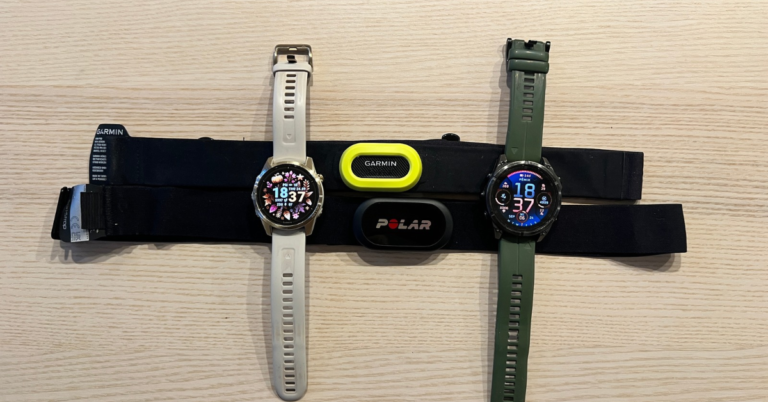
For more accurate heart rate tracking during workouts, a chest strap is often a better option than wrist-based heart rate. But even with a more accurate heart rate reading, you still need to know your accurate zones.
Why Your Heart Rate Can Still Vary Day to Day
Even with accurate zones, your heart rate is not fixed. It changes based on what’s happening in your body and your environment.
It can be influenced by:
- Poor sleep
- Stress
- Caffeine
- Dehydration
- Heat and humidity
- Menstrual cycle changes
- Illness
- Altitude
- Accumulated fatigue
- Strength training soreness
It’s important to keep these factors in mind if you’re training by heart rate. Even with accurately set watch heart rate zones, outside factors can still influence it.
Signs Your Watch Zones Might Be Off
Your watch zones may need a second look if:
- You’re constantly told you’re training too hard, even on conversational runs.
- You can race well above the heart rate your watch says should be sustainable.
- Your workouts feel much harder or easier than the assigned zone suggests.
- You’re training consistently but not seeing progress.
- You feel tired all the time despite following the plan.
One of the biggest red flags is when your watch creates anxiety instead of helping you make better decisions. Training data should support your running, not make every run feel like a pass-fail exam.
What VO₂ Max Testing Measures
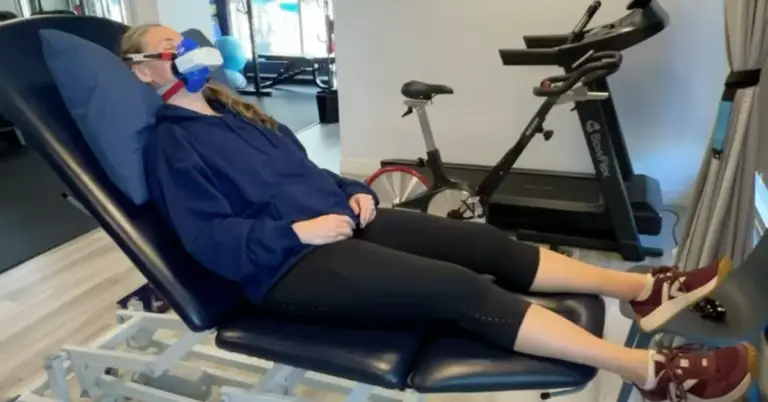
VO₂ max testing is a lab-based assessment that measures how your body uses oxygen during progressively harder exercise. For runners, it can help identify key physiological markers that are much more personal than a watch-generated estimate.
VO₂ max testing includes measurements such as VO₂ max, maximum heart rate, ventilatory thresholds, training zones, and breathing metrics.
Instead of relying only on age-based formulas, testing shows how your body actually responds to increasing intensity. That means your heart rate zones can be built around your physiology, not a generic calculation.
Learn more about VO₂ max testing in Port Moody.
Watch Zones vs. Tested Zones: The Practical Difference
Let’s say your watch estimates that Zone 2 is 125 to 140 beats per minute.
But during VO₂ max testing, your first ventilatory threshold happens at 148 beats per minute.
That’s a meaningful difference.
If you were following the watch blindly, you might spend months running much slower than necessary for your aerobic development. For another runner, the opposite could happen. Their watch might place Zone 2 too high, causing them to run most “easy” days at a moderate effort and that increased load can have them heading towards injury or burnout territory.
Neither runner is lazy or lacks discipline, they’re just working from poor information. Measured thresholds provide better context for setting training intensity.
Should You Ignore Your Watch Completely?
No, your watch is still useful.
It can help you track mileage, pace, trends, workout structure, and long-term progress. It can remind you when you’re pushing too hard on a recovery day or help you notice patterns in fatigue.
But your watch should be a tool, not the boss of your training, especially if you’re using the age-predicted heart rate zones.
A better approach is to combine:
- Measured heart rate zones
- Rate of perceived exertion
- Breathing cues
- Pace trends
- Recovery status
- Training goals
- Real-life context
This is where coaching and physiological testing work well together. The test gives you the data, the interpretation helps you apply it to real training.
If you want help applying your results to training, explore 1:1 consultations or program options.
The Bottom Line for Runners
Your watch heart rate zones are not necessarily wrong because the technology is bad. They may be wrong because they’re based on estimates, assumptions, and generalized formulas.
That’s fine if you’re using them as a rough guide, but less fine if you’re using them to make exact decisions about every run, workout, and race plan.
If your zones don’t match how running feels, your training feels stuck, or you’re tired of guessing whether you’re doing the “right” intensity, VO₂ max testing can give you a clearer, more individualized starting point.
Use watch data alongside measured physiology, RPE, and the context of the workout.
Key Takeaways
- Your watch heart rate zones are often based on estimated maximum heart rate or generalized formulas.
- Estimated zones can be helpful for trends, but they may be misleading when used as exact training prescriptions.
- Your true training zones depend on your physiology, including ventilatory thresholds and measured heart rate responses.
- Wrist-based heart rate can also be affected by movement, fit, temperature, and workout intensity.
- VO₂ max testing gives runners a more accurate way to set heart rate zones and train with confidence.
Ready to stop guessing your zones?
Book VO₂ max testing in Port Moody, BC, and get a heart rate zone prescription based on your actual physiology, not a watch estimate. You can also subscribe to my newsletter or follow me on Instagram for more evidence based tips for runners
Frequently Asked Questions About Watch Heart Rate Zones
Watch heart rate zones can be useful for general trends, but they are often based on estimated maximum heart rate and pre-set formulas. For many runners, these zones are not precise enough to use as exact training prescriptions.
Your watch may be using an estimated max heart rate that doesn’t match your actual physiology. Your easy run may also be affected by heat, fatigue, stress, dehydration, hills, or poor sleep. If your watch zones consistently don’t match how your runs feel, your zones may need to be tested.
The most accurate way to set heart rate zones is through physiological testing, such as VO₂ max testing with ventilatory threshold measurement. This allows your zones to be based on your actual response to exercise instead of a generalized formula.
You don’t need VO₂ max testing to run, but it can be very helpful if you want more accurate heart rate zones, better pacing guidance, and a clearer understanding of your fitness. Your watch will be more useful after testing because you can update your zones with measured data.
No. VO₂ max testing can be helpful for recreational runners, masters runners, injury-prone runners, and anyone training for a race. It’s especially useful if you want to make your training more specific and avoid guessing your intensity.
References
Fuller, D., Colwell, E., Low, J., Orychock, K., Tobin, M. A., Simango, B., Buote, R., Van Heerden, D., Luan, H., Cullen, K., Slade, L., & Taylor, N. G. A. (2020). Reliability and Validity of Commercially Available Wearable Devices for Measuring Steps, Energy Expenditure, and Heart Rate: Systematic Review. JMIR mHealth and uHealth, 8(9), e18694. https://doi.org/10.2196/18694
Martín-Escudero, P., Cabanas, A. M., Dotor-Castilla, M. L., Galindo-Canales, M., Miguel-Tobal, F., Fernández-Pérez, C., Fuentes-Ferrer, M., & Giannetti, R. (2023). Are Activity Wrist-Worn Devices Accurate for Determining Heart Rate during Intense Exercise?. Bioengineering (Basel, Switzerland), 10(2), 254. https://doi.org/10.3390/bioengineering10020254
Neufeld, E. V., Wadowski, J., Boland, D. M., Dolezal, B. A., & Cooper, C. B. (2019). Heart Rate Acquisition and Threshold-Based Training Increases Oxygen Uptake at Metabolic Threshold in Triathletes: A Pilot Study. International journal of exercise science, 12(2), 144–154. https://doi.org/10.70252/HNHZ4958
Shookster, D., Lindsey, B., Cortes, N., & Martin, J. R. (2020). Accuracy of Commonly Used Age-Predicted Maximal Heart Rate Equations. International journal of exercise science, 13(7), 1242–1250. https://doi.org/10.70252/XFSJ6815