If you’ve had pain on the outside of your knee and immediately reached for the foam roller, you’re not alone.
Foam rolling the IT band has been runner culture for years. It sits right up there with buying new shoes and hoping for an instant PB from carbon plates.
The problem is simple: it usually does very little.
If you have iliotibial band pain, or ITB pain, repeatedly attacking the side of your leg is unlikely to solve it. A more useful approach is to look at why that area is getting irritated, then build a plan around training load, strength, and running mechanics.
What is ITB pain?
ITB pain, also known as iliotibial band syndrome or ITBS, usually shows up as pain on the outside of the knee during or after running. It is one of the most common causes of lateral knee pain in runners. Older explanations focused on the IT band rubbing over the outside of the knee. More recent research leans toward compression of sensitive tissue near the lateral femoral epicondyle as a better explanation than friction alone.
That matters because treatment should match the problem. If the tissue is irritated by repeated load and compression, rolling harder at the side of your thigh is a poor (and painful!) plan.
Can you stretch or foam roll the IT band?
In short, no.
The IT band is fascia, not muscle, so it doesn’t stretch or release the way people often think it does. A commonly cited modelling study estimated that it would take roughly 9,000 newtons of force to create even a 1 percent change in fascia length. That’s around 900kgs, or 2000lbs; your foam roller isn’t doing that.
Some runners still like foam rolling because it can ease the feeling of tightness in nearby muscles such as the glutes or TFL, and that’s fair enough. Though a 2021 randomized controlled trial found that one session of foam rolling or stretching did not change short-term ITB stiffness in healthy subjects.
So if you enjoy it, keep it in the “feels nice” category, it’s not likely to do any harm. Just stop expecting it to solve IT band pain.
What usually matters more
With ITB pain, I would look at three things first.
1. Training load
A lot of ITB pain starts after something changes. An increase in hills, speed work, downhill running, or weekly volume are common causes. Sometimes it’s just more life stress on top of the same training.
If your symptoms started after a clear jump in load, that is usually where the conversation needs to start.
Downhill running is a common aggravator here. It increases braking demands and can irritate the outside of the knee quickly, especially when paired with more volume or tempo work.
2. Hip strength and control
Hip abductors and the gluteal muscles matter because they help control the pelvis and femur during the stance phase of our gait cycle. That makes them a worthwhile place to work in runners with lateral knee pain.
Recent reviews of conservative treatment strategies for runners with ITBS continue to support exercise-based management, and hip-abductor-focused work shows up repeatedly in the literature. Hip abductor strength, trunk strength, and lower-limb control are all useful rehab targets.
Weak glutes are not the only possible driver, they are one piece of a bigger picture. Strength, control, fatigue, and how well you use that strength while running are all important pieces.
3. Running mechanics
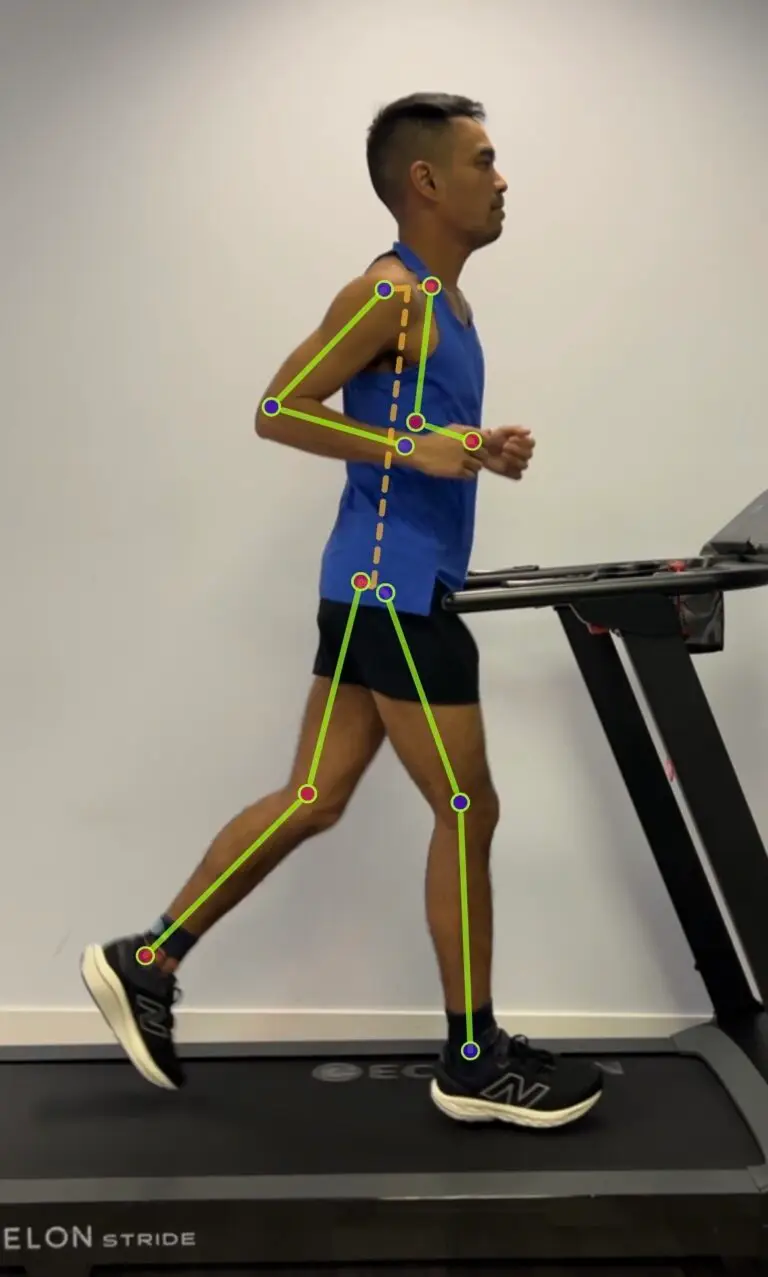
Sometimes the issue is not “bad form” so much as a movement pattern that your current tissues are not tolerating well. Overstriding, more downhill running, and mechanics that increase load at the knee can all contribute.
Cadence can also be a useful lever here, especially when overstriding or downhill running are also a part of the picture. A lower cadence can be a contributing factor in running injuries such as ITB pain.
[Related: Running Form Myths That Keep Runners Injured]
What to do instead of foam rolling
If your outer knee is sore and foam rolling has become a full-time hobby, here’s a better place to start.
Reduce the things that are clearly provoking it. That may mean pulling back on downhill running, speed work, or long runs for a short period. Plenty of runners can keep running while symptoms settle, provided the load is adjusted well.
Build strength where it counts. For runners with ITB pain, that usually means the glutes, lateral hip, trunk, and single-leg control work.
Look at your running mechanics if symptoms keep hanging around. Cadence, overstriding, downhill tolerance, and overall load distribution are all worth checking.
Three strength exercises that make more sense than foam rolling
1. Hip airplanes
Hip airplanes are excellent for runners because they challenge balance, coordination, and control through the stance leg.
How to perform it:
- Stand on one leg and hinge forward at the hips, keeping your arms out wide for balance.
- Slowly rotate your torso to open your chest, then rotate the other way toward your stance leg.
- Keep your core engaged and work to maintain control as you rotate.
- Aim for 10-15 reps on each side.
2. Single-leg hip thrusts
Hip thrusts build power through hip extension, a crucial movement pattern for runners
How to perform it:
- Sit on the floor and set your upper back against a bench, arms wide for support.
- Press up into a bridge position with your knees over your ankles.
- Lift one leg and bend the knee to 90 degrees, keeping your hips level.
- Lower your hips towards the floor, then press back up with a strong glute squeeze.
- Aim for 10-15 reps each side
3. Banded crab walks
Glute med activity during running has been studied extensively, and the glutes are active in both the stance and swing phase. That makes this area a reasonable target in rehab, especially when pelvic control is lacking.
How to perform it:
- Place a resistance band around the arches of your feet, feet hip-width apart, with a 30-degree knee bend.
- Take small, controlled steps side to side, maintaining the knee bend and ensuring the band stays around your feet.
- Perform 20 steps in each direction.
Note: To get the most out of this exercise, it’s essential to place the band correctly around your feet (not the thighs or shins) to properly engage the glute med without overworking the TFL, which can contribute to ITB issues.
If you’re looking for a strength program built for runners, you can explore my programs here.
When foam rolling can still be okay
If rolling your glutes, quads, or TFL makes you feel less stiff and helps you warm up, that’s fine. Keep it in the “feels nice” category.
Temporary relief is not a bad thing. But keep in mind that recurring ITB pain usually points to something in the bigger picture that still needs attention.
When to get help
It’s worth getting assessed if:
- the pain keeps returning every time training builds
- you can’t run without it flaring up
- you are changing your gait to avoid pain
- stairs, downhill running, or longer runs are getting progressively worse
- you’re not sure whether it is actually ITB pain or something else on the outside of the knee
A good assessment should look at more than just where it hurts. It should include your training load, strength, movement, and whether your running mechanics are helping or aggravating the issue.
Bottom line
If you have ITB pain, foam rolling the side of your thigh is not likely to help.
Load management, strength, and the way you’re moving under fatigue are far more useful places to focus on. Foam rolling may give short-term relief. But it doesn’t meaningfully change the IT band itself, and it often pulls runners away from the things that actually move the needle.
A better question is whether the load you are applying right now is greater than your body’s current capacity to adapt.
If your outer knee is flaring every time training gets harder, start there.
[Related: Why Runners Get Injured, Understanding Load vs Capacity ]
Sick of struggling with ITB pain?
If outer knee pain keeps showing up every time training ramps up, a running assessment can help you work out what is actually driving it. We’ll look at your running mechanics, strength, mobility, and training load, then map out the next steps clearly.
[Book a running assessment in Port Moody]
You can also subscribe to my newsletter or follow me on Instagram for more evidence based advice for runners
Frequently Asked Questions About ITB Pain
You can, but it’s unlikely to change the IT band itself. Some runners find it gives short-term symptom relief. Training load, strength, and running mechanics are usually more useful areas to address.
There is no single magic exercise. Hip-abductor strengthening, single-leg control work, and broader exercise-based rehab show up repeatedly in recent reviews.
Not always. Many runners can keep some running in place if the aggravating load is reduced enough for symptoms to settle. This is very individual and you should follow the advice of your physiotherapist or other healthcare provider.
They can contribute, but they’re rarely the whole story. Strength, control, mechanics, and training load all deserve a closer look.
References
Bonoan, M., Morales, M., Liu, X. W., Oyeniran, O., Zheng, K., & Palatulan, E. (2024). Iliotibial band syndrome current evidence. Current Physical Medicine and Rehabilitation Reports, 12(2), 193–199. https://doi.org/10.1007/s40141-024-00442-w
Chaudhry, H., Schleip, R., Ji, Z., Bukiet, B., Maney, M., & Findley, T. (2008). Three-dimensional mathematical model for deformation of human fasciae in manual therapy. The Journal of the American Osteopathic Association, 108(8), 379–390. https://doi.org/10.7556/jaoa.2008.108.8.379
Geisler, P. R. (2021). Current clinical concepts: Synthesizing the available evidence for improved clinical outcomes in iliotibial band impingement syndrome. Journal of Athletic Training, 56(8), 805–815. https://doi.org/10.4085/1062-6050-548-19
Nunes, G. S., Pizzari, T., Neate, R., Barton, C. J., & Semciw, A. (2020). Gluteal muscle activity during running in asymptomatic people. Gait & Posture, 80, 268–273. https://doi.org/10.1016/j.gaitpost.2020.06.008
Pepper, T. M., Brismée, J. M., Sizer, P. S., Jr, Kapila, J., Seeber, G. H., Huggins, C. A., & Hooper, T. L. (2021). The Immediate Effects of Foam Rolling and Stretching on Iliotibial Band Stiffness: A Randomized Controlled Trial. International journal of sports physical therapy, 16(3), 651–661. https://doi.org/10.26603/001c.23606
Sanchez-Alvarado, A., Bokil, C., Cassel, M., & Engel, T. (2024). Effects of conservative treatment strategies for iliotibial band syndrome on pain and function in runners: A systematic review. Frontiers in Sports and Active Living, 6, Article 1386456. https://doi.org/10.3389/fspor.2024.1386456
Semciw, A., Neate, R., & Pizzari, T. (2016). Running related gluteus medius function in health and injury: A systematic review with meta-analysis. Journal of Electromyography and Kinesiology, 30, 98–110. https://doi.org/10.1016/j.jelekin.2016.06.005