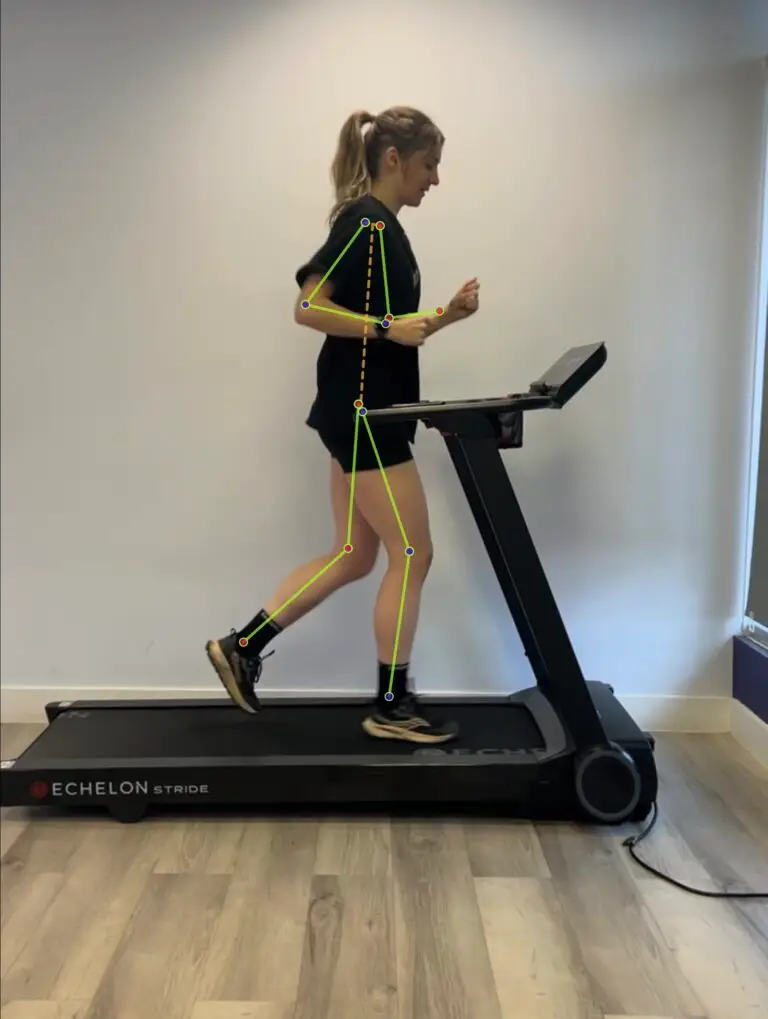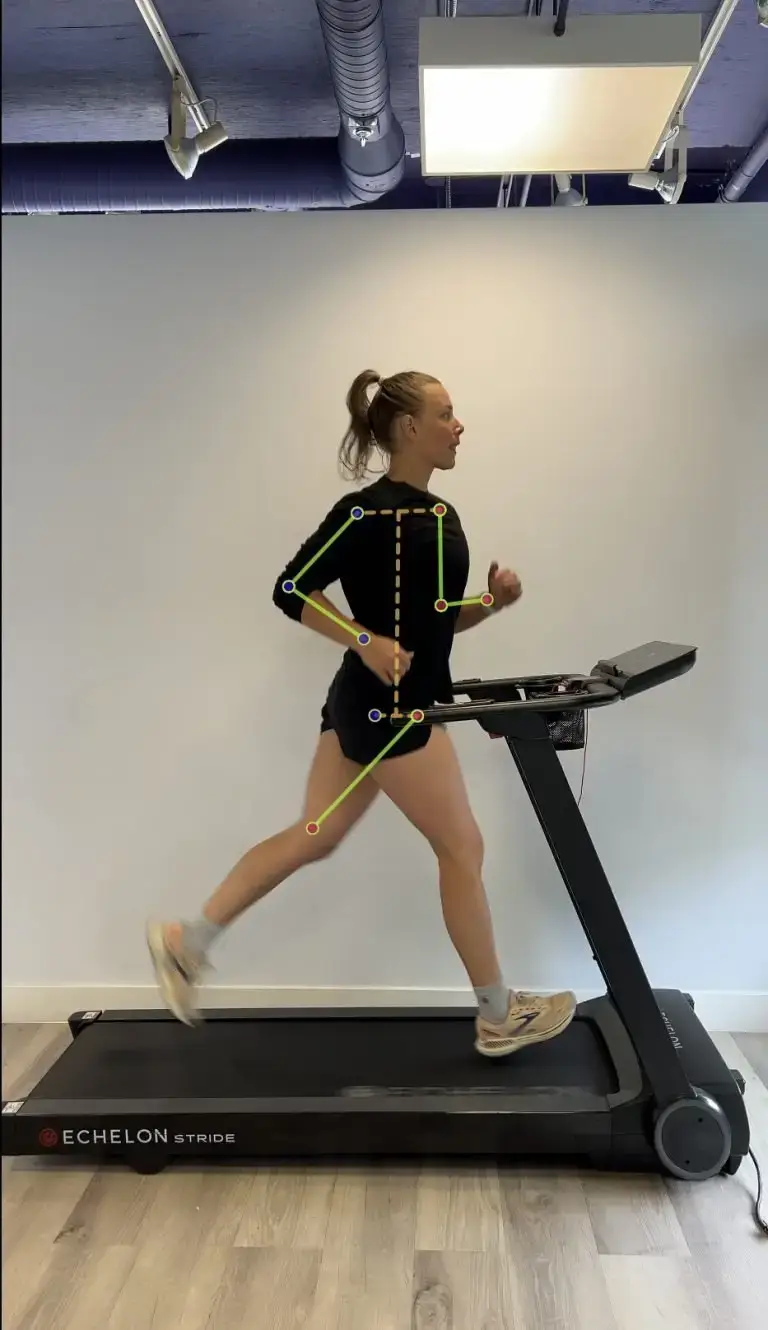
If you’ve ever finished a “recovery run” more tired than refreshed, you’re not alone. When I first made the transition from track to longer distance running, I really struggled with the concept of a recovery run. It just felt like extra volume and I was hardly feeling “recovered”. Turns out I was not running easy enough for it to actually be a recovery run!
Many runners have done the same – they think they’re training in the right heart rate zone, but in reality, they are often running too hard on easy days and too easy on hard days.
That is where heart rate training comes in. When you learn to use your heart rate zones properly, you can make every run count and start to see the results you’ve been chasing.
In this post, we’ll cover:
- What heart rate training is
- How to calculate your heart rate zones
- Common mistakes runners make
- How to use each zone in your weekly training
- Why lab testing, such as VO₂ max testing, gives you the most accurate zones
What Is Heart Rate Training?
Heart rate training means using your heart rate as a guide for workout intensity. Instead of running only by feel or chasing a certain pace, you train within specific zones that reflect how hard your body is actually working.
This matters because heart rate responds to effort in a way that pace alone cannot show, especially on hills, trails, in wind, or on hot days.
How to Calculate Your Heart Rate Zones
There are several ways to estimate your heart rate zones. Some are more accurate than others.
1. Tanaka formula for max heart rate
If you don’t have access to testing, a better option than the classic 220 minus age formula is the Tanaka equation:
Max HR estimate = 207 − (0.7 × age)
So for a 40 year old runner: 207 − (0.7 × 40) = 179 beats per minute (bpm) as an approximate max heart rate.
This is still an estimate, and there will always be individual variation, but research suggests it tends to fit adult populations better than 220 minus age, which can have quite large errors for individual runners.
You might still see 220 minus age in articles or on devices. It’s simple, but studies have shown that age based formulas like this can be off by more than 10 beats per minute for many people, which is enough to put you in the wrong zone.
2. Field test option (Benson & Connolly style)
If you don’t have access to lab based testing and you are healthy enough for hard efforts, you can use this style of field test:
- Find a 400 m track, or a gradual 400 to 600 m incline.
- Warm up thoroughly with easy running and a few strides.
- Run one hard effort over 400 to 600 m and record your heart rate at the end.
- Take 2 minutes of active recovery, then repeat the effort.
- Take another 2 minutes of active recovery, then do a third hard effort and record your heart rate again.
Your heart rate at the end of the third effort is a reasonable estimate of your max heart rate. If you honestly feel you had more to give, you can do a fourth repeat.
This still is not perfect, and you should only attempt it when you are healthy, well rested, and in a safe environment, but it tends to reflect your real max better than a guess from age alone.
3. VO₂ max testing
VO₂ max testing gives the most accurate zones. In a test, you:
- Run on a treadmill while wearing a mask that measures how much oxygen you use
- Increase speed and/or incline gradually
- Have your breathing and heart rate monitored across different intensities
From this, we can identify:
- Aerobic and anaerobic (lactate) thresholds
- The heart rates that line up with those thresholds
- Detailed heart rate and pace zones based on your own physiology
This removes a lot of guesswork and is especially useful if you struggle with pacing by feel, or you are training for longer events such as half marathons and marathons.
If you want a deeper dive into what happens in a lab test and how those numbers are used, read my guide on what a VO₂ max test is and how it works.
The 5 Heart Rate Training Zones
Most five zone systems look something like this:
- Zone 1 (about 50 to 60 percent of max HR): Very easy. Warm ups, cool downs, gentle recovery runs.
- Zone 2 (about 60 to 70 percent): Easy aerobic work. Builds base fitness, should feel very controlled.
- Zone 3 (about 70 to 80 percent): Moderate. Steady runs, some tempo work, and “cruise” efforts for experienced runners.
- Zone 4 (about 80 to 90 percent): Threshold or comfortably hard. Great for intervals and longer efforts that build speed endurance.
- Zone 5 (about 90 to 100 percent): Very hard. Short intervals, sprints, and hills.
Each zone has a role. The key is to spend most of your time in the zone that matches the goal of that particular session, rather than drifting into the same effort every day.
Common Mistakes Runners Make With Heart Rate
1. Easy runs aren’t actually easy
Strava, group runs, and ego can slowly pull “easy” pace up over time. Many runners end up spending most of their easy days in Zone 3.
Over weeks and months, that can mean:
- You don’t recover well from harder workouts
- Every day feels a bit harder than it should
- You feel tired, even though you do not have many true quality sessions in the week
2. Workouts don’t reach the intended intensity
If easy days leak into Zone 3, you often arrive at harder sessions already tired. That makes it tough to hit true threshold or VO₂ max intensities. You end up in a middle ground that feels hard, but does not give you the full benefit of either easy base work or proper high intensity training. Zone 3 isn’t bad; it has its purpose. But it’s too hard to be easy, and too easy to be hard so all of your runs shouldn’t fall there.
3. Zones based on inaccurate data
Many devices still use simple age-based formulas to set zones for you. As mentioned earlier, 220 minus age and similar equations are known to have wide error ranges at the individual level. (pmc.ncbi.nlm.nih.gov)
On top of that, wrist based optical sensors can be less accurate for rapid changes in heart rate, movement, and sweat. Several studies have found that wrist monitors track trends moderately well, but chest straps or some arm-based sensors are more accurate, especially for intervals and higher intensities. (pmc.ncbi.nlm.nih.gov)
If your zones are built on a rough estimate of max heart rate and an inconsistent sensor, it is easy to end up training in the wrong ranges.
How to Use Heart Rate Zones In Your Week
The exact breakdown will depend on your goals, experience, and time available, but a simple structure might look like this:
- Zone 2: Easy runs and many long runs live here. You should feel like you are holding back. You can talk in full sentences.
- Zone 3: Can be used for controlled tempo runs or steady state efforts, but doesn’t need to fill your week.
- Zone 4: One focused session per week for many runners. Think blocks of 5 to 10 minutes at threshold pace with short recoveries, or controlled cruise intervals.
- Zone 5: short, sharp efforts Sprints, strides, and short hills. These are potent, high quality work; so you don’t need many of these sessions in your week.
A simple principle that works well in practice: keep easy days genuinely easy so you can show up ready to work on hard days.
Why VO₂ Max Testing Takes Heart Rate Training Further
Age based formulas and field tests can get you into the right neighbourhood, but they are still estimates. Research has shown that common max heart rate equations can be inaccurate for many individual runners, especially those who are very fit or older than the populations those formulas were built on. (pmc.ncbi.nlm.nih.gov)
VO₂ max testing gives you:
- Heart rate values for your aerobic and anaerobic thresholds
- Insight into where your body shifts from mostly fat to mostly carbohydrate for fuel
- Training zones grounded in how your own physiology responds across intensities
This lets you plan your training around clear targets instead of guesswork, and can be especially helpful for runners chasing performance goals or trying to manage training load around a busy life. I break down the specific data you get from a test in What Does a VO₂ Max Test Tell Me?
Actionable Tips for Heart Rate Training
- Use a chest strap or validated sensor if possible. You’ll get more reliable data for both easy runs and intervals.
- Get the best max heart rate estimate you can. Use the Tanaka formula as a baseline, or use the Benson & Connolly field test if it is safe for you to do so. If possible, consider lab testing.
- Be patient with Zone 2 work. Aerobic adaptations happen over weeks and months. Slower now often means stronger later.
- Treat your data as feedback, not a scorecard. Heart rate varies with sleep, stress, caffeine, heat, and more. Use zones as a guide alongside how you feel.
- Review once a week. Check whether your easy days stayed easy and whether your hard days did what they were supposed to do.
Key Takeaways
Heart rate training can help you:
- Match intensity to the goal of each session
- Build endurance without living in a constant state of fatigue
- Recover better between workouts
- Get more out of quality sessions by arriving fresher
Whether you start with a simple formula or book a VO₂ max test, understanding and using your heart rate zones is one of the most practical tools you can add to your training.
RADY TO TRAIN SMARTER?
If you are tired of guessing your paces and want heart rate zones based on your physiology, you can book a VO₂ max test in Port Moody and leave with clear, personalised guidelines for your training.
For ongoing support, subscribe to my newsletter or follow me on Instagram for evidence-based, advice for runners
Frequently Asked Questions About Heart Rate Training
Most easy runs for most runners should sit in Zone 2, roughly 60 to 70 percent of your max heart rate. You should be able to hold a conversation without needing to pause for breath. If you routinely finish easy runs feeling drained, or you can’t talk in full sentences, you’re probably running too hard for true recovery.
Generally speaking, many long runs also sit in Zone 2, especially early in a training cycle or when you are building volume. Some runners may include short workouts within their run later in a cycle, for example race pace segments, but the bulk of the long run should still feel controlled and sustainable.
Yes. Training with zones gives you a way to monitor and adjust intensity across changing conditions such as heat, hills, and fatigue. Heart rate is one useful way to keep that balance of easy and hard runs in check, and it’s individual to you.
A simple starting point is to estimate your max heart rate with the Tanaka formula (207 − 0.7 × age), then apply percentages to set zones. If you want a more tailored number, use a structured field test such as the Benson & Connolly style repeats, or book a VO₂ max test so you can set zones from measured thresholds instead of estimates.
For most recreational runners, long steady runs fall in Zone 2. That typically feels like:
-Breathing that is deeper than walking, but still comfortable
-The ability to talk in full sentences
-A pace that feels like you could maintain it for a long time
If heart rate drifts higher than usual for the same pace on a given day, it may be a sign that you are tired, underfuelled, hot, or stressed, and it can be a good cue to slow down.

References
- Benson, R., & Connolly, D. (2020). Heart rate training (2nd ed.). Human Kinetics.
- Shookster, D., Lindsey, B., Cortes, N., & Martin, J. R. (2020). Accuracy of Commonly Used Age-Predicted Maximal Heart Rate Equations. International journal of exercise science, 13(7), 1242–1250. https://doi.org/10.70252/XFSJ6815
- Robergs, R. A., & Landwehr, R. (2002). The surprising history of the” HRmax= 220-age” equation. Journal of Exercise Physiology Online, 5(2), 1-10.
- Nikolaidis, P. T., Rosemann, T., & Knechtle, B. (2018). Age-Predicted Maximal Heart Rate in Recreational Marathon Runners: A Cross-Sectional Study on Fox’s and Tanaka’s Equations. Frontiers in physiology, 9, 226. https://doi.org/10.3389/fphys.2018.00226
- Pasadyn, S. R., Soudan, M., Gillinov, M., Houghtaling, P., Phelan, D., Gillinov, N., Bittel, B., & Desai, M. Y. (2019). Accuracy of commercially available heart rate monitors in athletes: a prospective study. Cardiovascular diagnosis and therapy, 9(4), 379–385. https://doi.org/10.21037/cdt.2019.06.05
- Chow, H. W., & Yang, C. C. (2020). Accuracy of Optical Heart Rate Sensing Technology in Wearable Fitness Trackers for Young and Older Adults: Validation and Comparison Study. JMIR mHealth and uHealth, 8(4), e14707. https://doi.org/10.2196/14707
- Casado, A., Foster, C., Bakken, M., & Tjelta, L. I. (2023). Does Lactate-Guided Threshold Interval Training within a High-Volume Low-Intensity Approach Represent the “Next Step” in the Evolution of Distance Running Training?. International journal of environmental research and public health, 20(5), 3782. https://doi.org/10.3390/ijerph20053782