HRV has become a common recovery metric to track for runners, especially now that watches, rings, and other wearables track it automatically while we sleep.
The tricky part is that HRV is often reduced to a simple idea that higher is good and lower is bad. In reality, HRV is highly individual and can change for many reasons, including hard training, poor sleep, illness, alcohol, and psychological stress.
For runners, the most important comparison is with your own usual range. A lower-than-normal reading after a hard workout may simply reflect the stress of that session. A sustained change alongside poor sleep, elevated resting heart rate, unusual fatigue, or harder-than-normal easy runs deserves more attention.
What Does HRV Actually Measure?
Your heart isn’t a metronome. Even if your heart rate is 60 beats per minute, your heart isn’t necessarily beating exactly once every second. There might be 980 milliseconds between one pair of beats, 1,030 milliseconds between the next, and 995 milliseconds between another.
Those tiny differences in timing are heart rate variability, or HRV.
One way to think about HRV is as a measure of how flexible your heart’s control system is. Your autonomic nervous system is constantly making small adjustments to heart rate in response to breathing, movement, training, sleep, psychological stress, illness, and everything else your body is dealing with.
You can think of the sympathetic nervous system as providing some of the accelerator and the parasympathetic nervous system as providing some of the brake. Your heart is continually responding to both rather than beating at one perfectly fixed interval.
At rest, greater beat-to-beat variation often reflects stronger parasympathetic influence and a cardiovascular system that has more capacity to make those small adjustments. When HRV drops below your usual range, the intervals between beats have become more uniform. That can happen when your body is dealing with greater physiological or psychological stress.
This is where HRV can be a cool metric for runners to follow. Training is a stressor, and adaptation depends partly on your ability to absorb that stress and recover from it. A chronically suppressed HRV can be a sign that your autonomic system is under sustained strain, particularly when it appears alongside poor sleep, increased resting heart rate, fatigue, or declining performance.
Research into HRV-guided training supports the idea of matching harder training to physiological readiness. Athletes following HRV-guided programs often complete fewer moderate or high-intensity sessions, and some studies have found better submaximal physiological adaptations and fewer non-responders compared with fixed training plans.
That doesn’t allow us to say that every workout performed on a low-HRV day will produce less adaptation. But it does suggest that repeatedly pushing hard when your normal HRV pattern indicates poor recovery may be a less effective training strategy.
There are several ways to calculate HRV. One of the most commonly used measures in athlete monitoring is RMSSD, or the root mean square of successive differences between normal heartbeats. RMSSD is strongly influenced by parasympathetic activity and works well for repeated short-term monitoring.
That distinction becomes important when comparing wearable devices because they don’t all calculate and report HRV in the same way.
Why a Higher HRV Isn’t Automatically Better
Higher resting HRV is often associated with greater parasympathetic activity and favourable cardiovascular fitness. Endurance training can also increase some measures of HRV over time.
Within an individual athlete, however, the direction of change doesn’t always tell you whether training is going well. Research in endurance athletes has found HRV changes during both positive training adaptation and periods of overreaching.
A temporary drop after a demanding workout may reflect the stress of the session and the recovery response that follows. An increase can occur with improved fitness, but it can also appear in situations where training stress has become excessive. This is why HRV needs to be interpreted against your normal range and the rest of your training and recovery data.
Your Personal HRV Baseline
Absolute HRV varies considerably between people. One runner might normally sit around 35 milliseconds, while another consistently records values in the 70s or 80s.
Age, sex, genetics, fitness, resting heart rate, and the measurement method all contribute to those differences.
If both runners wake up with an HRV of 38ms, the reading means something different for each of them. For the runner whose normal range is 30 to 40, it may be completely routine. For the runner who usually sits between 70 and 80, it represents a substantial change from baseline.
That is also why comparing HRV numbers with friends or other runners online has limited value. Your own trend gives you far more information about whether something has changed.
One Low HRV Reading vs a Longer-Term Change
HRV can fluctuate substantially from day to day. A hard workout, short night of sleep, stressful day, illness, or alcohol can affect the following morning’s reading.
Athlete-monitoring research generally supports frequent measurements and looking at trends over time. Rolling averages and normal day-to-day variation can help you distinguish a brief response from a more sustained change.
If your HRV drops outside its usual range for one night and returns to normal the next day, there may be very little to act on, especially if you feel good, your resting heart rate is normal, and training feels as expected.
A different pattern emerges when HRV remains outside your normal range for several days while resting heart rate rises, sleep deteriorates, and your usual easy pace feels unexpectedly hard. Several indicators are now pointing in the same direction.
What Can Affect HRV in Runners?
Your HRV responds to the total stress your body is dealing with. Running is part of that picture, along with sleep, illness, alcohol, work stress, family demands, travel, and everything else happening outside training.
Training Load
Exercise places physiological stress on the body, which is part of how training drives adaptation. A demanding interval session, long run, race, or heavy block of training can temporarily alter HRV as your body responds.
Longer-term endurance training can also shift your baseline as cardiovascular fitness develops. The interpretation depends on what has happened recently and whether other signs of poor recovery are appearing at the same time.
Sleep
Poor sleep can affect autonomic regulation and HRV.
A 2025 systematic review and meta-analysis found that sleep deprivation was associated with a significant reduction in RMSSD, although changes in other HRV measures were less consistent.
For runners balancing training with work, family, and an already full schedule, that context is important. A change in HRV after a terrible night of sleep may have more to do with disrupted recovery than the workout you completed the day before.
Illness
Illness can alter autonomic function and normal cardiovascular patterns. HRV, resting heart rate, and other wearable measures may change when someone is becoming unwell.
If your HRV is outside its usual range and you’re also developing a sore throat, fever, body aches, or significant fatigue, you’re likely getting sick, or already are sick; and it’s a good idea to rest and look after yourself.
Alcohol
Alcohol is one of the more predictable factors that can change overnight cardiovascular data.
Controlled research has shown that acute alcohol intake can reduce several HRV measures and increase heart rate for hours afterward. If your wearable gives you a poor recovery score after a few glasses of wine, the previous evening may explain part of what you’re seeing.
Psychological Stress
The autonomic nervous system also responds to psychological stress. Work deadlines, travel, family responsibilities, emotional stress, and a packed schedule can all influence HRV.
A lighter training week doesn’t always produce better recovery data if stress elsewhere in your life has increased at the same time.
Can You Compare Garmin, Apple Watch, Oura, and WHOOP HRV?
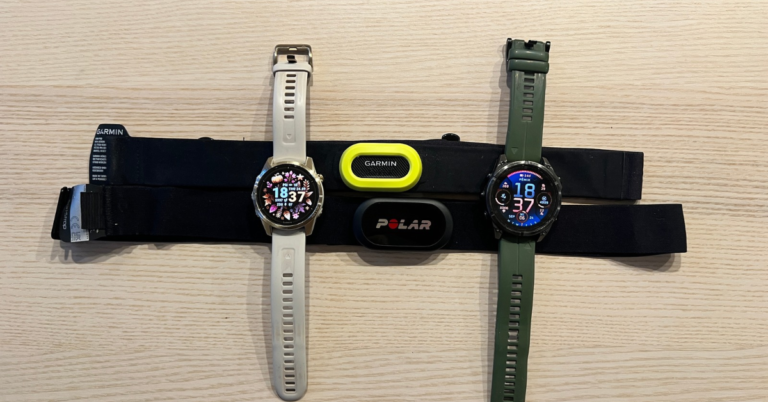
Comparing raw HRV numbers between devices can be difficult because wearables may use different calculations, sampling periods, and algorithms.
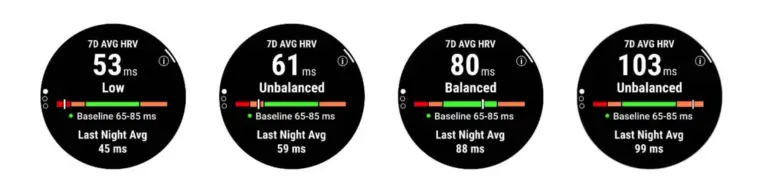
Garmin measures HRV during sleep, establishes a personal baseline, and compares a rolling seven-day average with that range for HRV Status.
Apple Health reports HRV using SDNN, which stands for the standard deviation of normal-to-normal heartbeat intervals. SDNN looks at how much the time between normal heartbeats varies across the measurement period.
Oura and WHOOP primarily report HRV using RMSSD. RMSSD focuses on the differences between consecutive heartbeat intervals and is particularly sensitive to short-term parasympathetic activity.
Because SDNN and RMSSD calculate variability differently, an Apple Health HRV value shouldn’t be expected to match an RMSSD value from Oura or WHOOP.
Measurement timing also affects HRV. Posture, breathing, movement, food, exercise, and psychological stress can all influence the result, so comparing measurements collected under different conditions adds another source of variation.
Consumer wearables can measure overnight HRV reasonably well, although accuracy differs between specific devices and models. A 2025 validation study comparing several wearables with ECG found different levels of agreement across the devices tested.
For tracking your own data, consistency is more important than trying to compare numbers across platforms.
Should You Change a Workout Because Your HRV Is Low?
One low HRV reading doesn’t automatically mean you need to cancel a workout.
Research into HRV-guided training has shown that adjusting training based on HRV can produce positive physiological adaptations. Some studies have also found that athletes using HRV-guided training complete fewer moderate or high-intensity sessions than athletes following fixed plans.
Systematic reviews haven’t shown a large or consistent performance advantage over well-designed predefined training, though, so I think that HRV works best as part of a broader decision-making process rather than a strict training guideline.
A 2025 study in recreational distance runners compared training prescribed using heart rate, race pace, and HRV. All three approaches produced training adaptations, with different methods showing advantages for different physiological or performance outcomes.
If your HRV is lower than normal but you slept well, your resting heart rate is typical, you feel good, and your warm-up feels as expected, your planned workout may still be appropriate.
If HRV stays outside your normal range and you’re also seeing elevated resting heart rate, poor sleep, heavy legs, higher RPE, or symptoms of illness, adjusting the session may make sense. That could mean taking a full rest day, or adjusting the intensity by shortening your workout or switching intervals for an easy run.
[Related: RPE for Running: How to Use Effort, Heart Rate and Pace Together]
HRV Is One Part of the Recovery Picture
HRV gives you information about autonomic regulation, but recovery is influenced by much more than just one metric.
It’s good to look at the whole picture including resting heart rate, RPE, pace, sleep, recent training load, illness symptoms, nutrition, psychological stress, and how your running actually feels.
When several of those indicators change at the same time, you have stronger evidence that recovery may be compromised. When one number looks unusual and everything else feels normal, watching the trend over another day or two may be more appropriate than making an immediate training change.
The Bottom Line on HRV for Runners
HRV can help runners track how their bodies are responding to training, sleep, stress, illness, and recovery.
Your own baseline is more informative than someone else’s number, and longer-term trends are more meaningful than a single morning reading. Wearables also use different HRV calculations and measurement methods, so raw numbers from Garmin, Apple Watch, Oura, and WHOOP may not be directly comparable.
Combine HRV with resting heart rate, RPE, sleep, symptoms, training load, and how your running feels before deciding whether your training needs to change.
Key Takeaways
- HRV measures the variation in time between consecutive heartbeats.
- RMSSD is commonly used in athlete monitoring and is strongly influenced by parasympathetic activity.
- There is no ideal HRV number that every runner should aim for.
- Your personal baseline and longer-term trend are more informative than comparisons with another runner.
- One unusual HRV reading rarely provides enough information to make a training decision on its own.
- Training, sleep, illness, alcohol, and psychological stress can all affect HRV.
- Garmin, Apple Watch, Oura, and WHOOP don’t all calculate or report HRV in the same way.
- Apple Health reports HRV using SDNN, while Oura and WHOOP primarily use RMSSD.
- HRV-guided training can support training decisions, although current evidence doesn’t show that it consistently outperforms a well-designed training plan.
- Consider HRV alongside resting heart rate, RPE, sleep, symptoms, training load, and performance.
Not Sure What Your Recovery Data Is Telling You?
Running watches and wearables can give you a huge amount of information, but deciding which numbers deserve your attention and how they should influence training is another story.
A one-on-one consultation can help you review your heart-rate data, recovery patterns, current training load, and running program, then make practical adjustments that fit your goals and schedule. In-clinic and virtual options are available. Learn more HERE.
Frequently Asked Questions About HRV For Runners
There isn’t one ideal HRV number for every runner. HRV is largely individual and varies with age, sex, genetics, fitness, resting heart rate, and measurement method. Your usual range and longer-term trend provide more information than comparing your HRV with another runner.
One low HRV reading doesn’t automatically require a rest day. Consider your sleep, resting heart rate, recent training load, symptoms, RPE, and how you feel during your warm-up before deciding whether the session needs to change.
Higher resting HRV is often associated with greater parasympathetic activity and aerobic fitness, although individual responses are more complex. HRV can change during positive training adaptation and periods of excessive training stress, so it needs to be interpreted relative to your usual range.
Yes. Sleep deprivation can affect autonomic regulation. A 2025 systematic review and meta-analysis found a significant reduction in RMSSD following sleep deprivation, although other HRV measures didn’t change consistently.
Alcohol can reduce HRV and increase heart rate for several hours after drinking. The response varies between individuals, but alcohol can have a noticeable effect on overnight wearable data.
Direct comparison can be difficult because devices use different sampling periods, algorithms, and, in some cases, HRV calculations. Following your trend on the same device under similar conditions gives you a cleaner comparison.
Apple Health reports HRV using SDNN, while Oura and WHOOP primarily use RMSSD. These calculations describe variability differently, and the devices also collect data under different conditions, so the raw numbers shouldn’t be expected to match.
HRV-guided training can produce positive physiological adaptations and may help determine when harder training is appropriate. Current research hasn’t shown a consistent endurance-performance advantage over well-designed predefined training, so HRV is best considered alongside other training and recovery information.
References
Bau, P. F., Moraes, R. S., Bau, C. H., Ferlin, E. L., Rosito, G. A., & Fuchs, F. D. (2011). Acute ingestion of alcohol and cardiac autonomic modulation in healthy volunteers. Alcohol (Fayetteville, N.Y.), 45(2), 123–129. https://doi.org/10.1016/j.alcohol.2010.08.011
Bellenger, C. R., Fuller, J. T., Thomson, R. L., Davison, K., Robertson, E. Y., & Buckley, J. D. (2016). Monitoring Athletic Training Status Through Autonomic Heart Rate Regulation: A Systematic Review and Meta-Analysis. Sports medicine (Auckland, N.Z.), 46(10), 1461–1486. https://doi.org/10.1007/s40279-016-0484-2
Dial, M. B., Hollander, M. E., Vatne, E. A., Emerson, A. M., Edwards, N. A., & Hagen, J. A. (2025). Validation of nocturnal resting heart rate and heart rate variability in consumer wearables. Physiological reports, 13(16), e70527. https://doi.org/10.14814/phy2.70527
Düking, P., Zinner, C., Trabelsi, K., Reed, J. L., Holmberg, H. C., Kunz, P., & Sperlich, B. (2021). Monitoring and adapting endurance training on the basis of heart rate variability monitored by wearable technologies: A systematic review with meta-analysis. Journal of science and medicine in sport, 24(11), 1180–1192. https://doi.org/10.1016/j.jsams.2021.04.012
Esco, M. R., Fields, A. D., Mohammadnabi, M. A., & Kliszczewicz, B. M. (2025). Monitoring Training Adaptation and Recovery Status in Athletes Using Heart Rate Variability via Mobile Devices: A Narrative Review. Sensors (Basel, Switzerland), 26(1), 3. https://doi.org/10.3390/s26010003
Immanuel, S., Teferra, M. N., Baumert, M., & Bidargaddi, N. (2023). Heart Rate Variability for Evaluating Psychological Stress Changes in Healthy Adults: A Scoping Review. Neuropsychobiology, 82(4), 187–202. https://doi.org/10.1159/000530376
Manresa-Rocamora, A., Sarabia, J. M., Javaloyes, A., Flatt, A. A., & Moya-Ramón, M. (2021). Heart Rate Variability-Guided Training for Enhancing Cardiac-Vagal Modulation, Aerobic Fitness, and Endurance Performance: A Methodological Systematic Review with Meta-Analysis. International journal of environmental research and public health, 18(19), 10299. https://doi.org/10.3390/ijerph181910299
Ranieri, L. E., Casado, A., Martin, D., Trujillo-Colmena, D., Gil-Arias, A., Kenneally, M., & Jiménez, A. (2025). Performance and Physiological Effects of Race Pace-Based Versus Heart Rate Variability-Guided Training Prescription in Runners. Medicine and science in sports and exercise, 57(7), 1510–1522. https://doi.org/10.1249/MSS.0000000000003671
Zhang, S., Niu, X., Ma, J., Wei, X., Zhang, J., & Du, W. (2025). Effects of sleep deprivation on heart rate variability: a systematic review and meta-analysis. Frontiers in neurology, 16, 1556784. https://doi.org/10.3389/fneur.2025.1556784
Image source: https://www.garmin.com/en-GB/garmin-technology/health-science/hrv-status/